Monday, 9 June 2014

Archaeological Sites Destroyed in Finland

As continuation onto yesterday's post about the battle between maritime archaeologists and treasure hunters, I wanted to make people aware that destruction to archaeological sites does not just happen underwater.
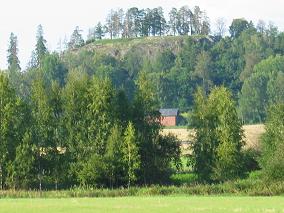
Finland. Source

An article published by Yle News (the Finnish version of BBC) states that some well-known archaeological sites in Finland have been subjected to vandalism. One person or several people have been digging holes around the sites without permission. These holes does not seem to be the work of professional archaeologists.

The unfortunate side of archaeology is that it is destructive. Once something has been dug then there is no way of putting it back as it was, consequently important knowledge is lost and the archaeological record is flawed. People should be aware that it is illegal to dig on known archaeological sites (both terrestrial and maritime) without permission.
Hakoinen Castle in Janakkala, Finland, was one of the sites subjected to vandalism. Source

If anyone would be interested in becoming an archaeologist, there are a range of different courses available all over the world. Many universities offer archaeology as a degree subject, but you can also find smaller organisations organising courses in archaeology in your local area and probably for a cheaper price.

L

Sunday, 8 June 2014

Maritime Archaeologists vs Treasure Hunters

Now this is a subject that makes the blood run hot in the veins of archaeologists. First of all, let us establish the difference.

As an archaeologist I am interested in uncovering forgotten stories from the past. Although it may not necessarily be of monetary value, knowledge is the most valuable thing we can get from any archaeological site. Valuable artefacts are of secondary nature, although it is undeniably nice to find a piece of jewellery once in a while, but REPEATING; this is not the main purpose of archaeology.
Disaster flood strikes! Graphic image from the movie '2012'. Source
Most people have probably watched the movie '2012' about a disaster flood striking the Earth and threatens to wipe out all life on the planet. Well at the end of the movie [SPOILER ALERT], the first thing the survivors do after establishing their own safety is to start searching for what is left. A lot of people have died and with them the knowledge of many things was lost - to recover this knowledge is now the aim of the survivors. So what is not this if not archaeology! True, it is from a very different perspective compared to what we are normally used to, but nonetheless it is archaeology.

Now in perspective, a treasure hunter is only interested in recovering artefacts of monetary value. That person does not care about what we can learn from the site and sees that as the secondary purpose of the project. Unfortunately a lot of history and knowledge is lost because of this, and all those underwater graves are disturbed and treated with no respect.
Maybe not quite how it works... Source
The United Nations estimates that about 3 million shipwrecks lay scattered across the world's oceans (Source). Although this is a huge number, it is not very likely that you will come across a treasure shipwreck during your lifetime. So despite what has been said, treasure hunting does not bring in the millions into your bank account. In fact, it is likely to just do the opposite. Two divers have pleaded guilty of looting artefacts from shipwrecks, with the total value being £250 000. They now face to be heavily fined and receive a prison sentence of up to 8 years. Their case will appear in court again on the 2nd July.

Now here is a question; why does illegal looting of shipwrecks keep occurring on a regular basis? Is it because people tend to ignore the laws or that they are ignorant of them? Best way of counteracting this is through education! The domestic and international maritime laws need to be made available and visible to everyone. They should also be included in the schools' curriculum, as the earlier people are made aware the better. Although I have studied archaeology for four years now, it was not until this year (2014) that I properly learnt about the laws concerning maritime archaeological sites! If I am not made aware of this before now, then certainly we can't expect the public to be aware of it either.
The UNESCO 2001 Convention protects the World's underwater heritage. Source
So what should you do if you happen to come across a shipwreck. If the wreck lies in UK territorial waters (the law states differently depending on which country the wreck is located in) then you have 28 days to report it to the Receiver of Wreck. Failure to do so will be seen as an offence and you can face a fine for breaking the law. You are also not allowed to touch it until the site has been properly investigated - so no illegal looting! After reporting the site it doesn't mean that you aren't allowed to be part of the project any more. Professional Maritime Archaeologists welcome volunteers as this will speed up the project and also spread the knowledge of how to excavate and treat underwater sites - so make sure you keep an eye on what they are planning! You can of course claim the credit for discovering the site as well.

I could go on ranting about this subject, but I shall save it for a later post. It is a shame that there is some disagreement between maritime archaeologists and treasure hunters, as a mutual partnership could turn out to be very valuable indeed.

L

Saturday, 7 June 2014

How do you become an archaeologist?

So I was thinking the other day about the different questions people ask me when I tell them I study Maritime Archaeology. The most common one seems to be; "what made you choose it and how did you get to where you are today?".
I am the happiest standing knee-high in mud! Source 

When I was 13 my teacher asked the class to write down what we want to become when we grow up. She collected all the notes and kept them in a drawer for three years and during the week before we graduated from the school she handed them back out to everyone. To my surprise I found that I had written 'archaeologist'. I had absolutely no memory of this but the thought stuck with me. 

In Sixth Form I decided to take all history classes and other relevant subjects so when the day comes for me to apply for my undergraduate degree in archaeology, I would have the highest chance possible. The day came and I got accepted on to an archaeology programme at the University of Wales, Trinity Saint David, so I packed my bags and moved from Finland to the United Kingdom and I haven't looked back since. 

During my undergraduate degree I became interested in maritime archaeology and decided I should do a masters in that subject. In order to prepare myself for the MA I chose most of the case studies for my assignments from a maritime environment and I also decided to do some work experience at the Mary Rose museum during my second year. This definitely paid off as I got a lot of contacts in the business (which actually in the end got me the job I have today) and it was another good aspect I could put on my masters application.

So I applied and was accepted on to the masters programme in Maritime Archaeology at the University of Southampton. Part of my current research for the program is actually based on ideas I originally thought of when I was 14, but wasn't skilled enough at the time to test them out. So if you happen to come across something interesting then keep it in mind as it may come a day when you actually base you research on it - it is never too early to start!
Just a normal day at the office... Source
Yesterday I finally got a good break as the Royal Naval Museum in Portsmouth hired me! I am very excited as I have finally reached the goal I dreamt about when I first caught an interest in archaeology.

My younger brother once told me that I am the only person he knows who actually follow my dreams and do what I want to do. I realised at that point that far too many people take the easy way out. Where I stand today is the result of 10 years of hard work, during which I have been able to keep my passion and interest for the subject. I now feel I can give others the advice to follow your dreams! It may be hard work and few short cuts, but the feeling you get from achieving you goal is amazing. I still have a long way to go, during which I most likely will have ups and downs, but even if it means I have to work with something else in order to work up my experience in archaeology then that is what I am prepared to do. Don't take the easy way ladies and gents! The hard work was so worth it!

L

Thursday, 6 February 2014

Damn those shipwrecks!

So, just wanted to put this out there; maritime archaeology does not just involve shipwrecks, but a range of other features too like historic and archaeological landscapes, buildings, airplanes, etc. So if you happen to be designing a logo that has to do with maritime archaeology, please forget about trying to squeeze a shipwreck in there! Rather choose something that can symbolize maritime archaeology in a way that includes a larger spectrum of what we do.
Yup we do this too - snorkel not necessarily required... Source
I came across this article the other day! 1500-year-old basilica - beautiful! I am looking forward to read more about in the future when further excavations have been conducted. Just thought I would share it with you.

1500-year-old basilica discovered under Lake Iznik
Yeah, sometimes it really is this easy! Source
L


Tuesday, 13 August 2013

FREE Education! The University of Southampton to launch MOOC

Not so much related to archaeology, but interesting nonetheless!

This coming September, the University of Southampton is launching its first ever MOOC or Massive Open Online Course. The idea of this is that anyone, living anywhere in the world, has access to the courses for free! To participate you do not need any previous knowledge of the subjects you may study - as long as you are keen and interested in learning something new, or wanting to get a taster for future studies, then it is just to get started!

Source: http://www.edudemic.com/2012/04/how-online-learning-is-shaping-the-future-of-education-right-now/

Sign up for the FutureLearn newsletter (all you need is an email address) today using this link. The courses will cover a range of subjects and will only require you to study for two to three hours per week. You can even choose not to complete the whole course, but instead only choose the topics that seem interesting to you.

You can find more information on this amazing opportunity by clicking the first link above! I personally can't wait to try this!

L

A Brief, Handy Guide to Bog Bodies


(n.b.: This post contains pictures of dead people! Although not gross in detail, I am warning you just to save you the shock)

---

What's that? You want to learn about bog bodies? Then I shall educate you my dears!


Put very simply, bog bodies are bodies that have been naturally preserved in peat bogs; as well as most of the skin surviving, the internal organs, hair, nails, facial features and stomach contents usually survive too. This, however, is perhaps the best case scenario for a bog body; levels of preservation obviously differs from case to case. Some of the best known examples of bog bodies (famous for the high level of preservation), include the following...


Tollund Man


Lindow Man


Yde Girl


They make not look that well preserved, but they are, and it has meant that facial reconstructions can be made to recreate their life. But I shall tell you about the reconstructions later.


The Nitty Gritty

So why do these bodies survive so well? The conditions of a bog are quite particular; acidic, wet, cold and lacking in oxygen. This is, of course, a natural occurrence in bogs, but it is quite possibly the best place for a body to be preserved. It should be noted, though, that the bones do not usually survive in the process - hence the 'flattened' appearance of the bodies.


Why Are There So Many Bodies Found in Bogs?

Hundreds of bodies have been found in peat bogs across the world; dating from the Mesolithic to as recent as WWII (more on that later!). The excellent preservation enables us to work out why these bodies were put in the bogs.
From the evidence, there are three possibilities for bog bodies; burial, murder/ritual sacrifice, or an accidental death. Many have suffered violent deaths, which suggests murder or something similar; for example, the Huldremose Woman was found to have died from a large cut on her upper arm; the Tollund Man was found with rope around his neck, suggesting he had been hanged; and Grauballe Man had his throat sliced.

Similarly, Lindow Man was found with stab wounds and blunt force trauma to the head, suggesting an attack; it may well be that he had been killed (on purpose or by accident, we will never know) whilst out and about, and then his body was just 'dumped' in the bog. However, his nails were spectacularly manicured; this and the way he was killed has caused arguments among people; the most common theory is that he was ritually killed by Druids.

There are examples of bog bodies that suggest they were killed purely for their 'deformities'; Aschenbroken Man had a deformity in the arm (from abornormal healing after being broken previously); and Yde Girl had scoliosis (causing her to have a curved spine) and was only 4'7", despite being 16 years old.


History of Bog Bodies

The oldest bog body is thought to be the Laois Boy of Ireland, which was found 2 years ago, and is thought to be 4,000 years old. However, there is also the Koelbjerg Woman from Denmark, which dates to 8,000BC; only her bones survived, so it is debatable as to whether she counts as a bog body or not.

There have been other bodies found during the Prehistoric, but the majority date to the Iron Age; it seems these bodies from the Iron Age are mostly ritual sacrifices, due to them all having strange deaths.

---

I am currently compiling an online timeline of most bog bodies found in the world, with a quick intro about each body, and a picture if their faces have been reconstructed. Keep your eyes peeled - it should be finished soon!

I will also most likely update this post sometime in the next few days as well - many more pictures and other cool stuff!


M


Extra Reading:
European Iron Age Bog Bodies
Archaeology Magazine Archive: Bog Bodies
National Geographic Gallery of Bog Bodies
Bones Don't Lie (blog): Bog Bodies
Tales From the Bog - Karen E. Lange - National Geographic

Monday, 12 August 2013

The Vasa - a 17th Century Swedish Warship

First of all, apologies for the lack of posts during these summer months! Between graduation, family visits and sorting out stuff for the coming year there is a distinct lack of free time at the moment, but it shall get better!

Last Saturday (10th August) it was exactly 385 years since the sinking of the Swedish warship ‘Vasa’. The Vasa has always been one of my personal favourite historical ships; the ship didn’t have a long history, as it sank on its maiden voyage after travelling only 1300 m from the harbour in 1628, but she has provided us with some amazing insights into the life in 17th Sweden as some of the artefacts recovered from the ship as well as the ship herself were in very good condition.

The sinking of the Vasa. Source: http://www.vasamuseet.se/en/The-Ship/The-sinking/

The building of the Vasa began in 1626 on the orders from the Swedish king himself. Gustaf II Adolf, the King of Sweden at the time, was fighting several wars and was in the need of more warships. The Vasa was built to amaze everyone who saw her, and with 64 guns and a crew of 450 men she truly was a powerful war machine, built to turn the wars into Sweden’s favour. She was also a very beautiful ship with many carved ornaments and sculptures, painted in colourful colours.
Overview of the construction the Vasa. Source: http://lovingstockholm.wordpress.com/tag/visit-vasa/
Unfortunately, the shipwrights had been a bit over ambitious when building the ship, which doomed her to sink on her maiden voyage. On 10th August 1628 the Vasa set sail from the Stockholm harbour. Many had come down to watch the ship proudly sail out of the harbour, and many of the crew had brought their families onboard for the first length of the journey. As soon as the ship had sailed out of the lee of the port, sails were raised to allow the wind to carry her for the rest of the journey. Suddenly when the wind got hold of the ship, the Vasa started heeling to the portside and the water started rushing in through the lower gunports that had been left open after firing the salute when leaving port. As the situation was hopeless the crew abandoned the ship, clinging onto the masts or other debris that was floating on the surface, waiting to be rescued. It is thought that around 30 people out the 150 people onboard at the time of the sinking were killed in the event.

After the sinking of the Vasa, an inquest was carried out to determine why the ship sank and whose fault it may have been. From eyewitness accounts it could be determined that the ship sank due to instability in the construction. The day before the ship was due to set sail, Vice Admiral Klas Fleming had carried out an exercise to test the stability of the ship, where 30 men would run across the deck and back ten times causing the ship to heel to either side. However, this exercise had to be stopped after the third time as the ship was in the risk of heeling over. The Swedish King also held part of the blame as he had approved the dimensions of the ship prior to the start of construction. Naturally the master shipwright, Henrik Hybertson, would carry some of the blame as he, although being an experienced shipwright, had carried out the building of the ship. Finally, the blame could have been laid on the captain of the Vasa, Captain Söfring Hansson, as he was aware of the instability in the construction and should have closed the lower gunports and also redistributed the weight of the ship or even suggested to reconstruct the Vasa prior to its maiden voyage.

On the 25th August 1956, Anders Franzen rediscovered the ship’s location after the information of the location of the ship had been lost through time. This was the start of a major project that on this date is still ongoing. On the 24th April 1961, the hull of the ship broke the surface in front of the world media after 333 years on the bottom of the sea. The major conservation project of preserving the ship and the artefacts started soon after. Nothing of its like had ever been done before, so a lot of the work carried out were experiments with unknown consequences. The ship was sprayed with polyethylene glycol (PEG), which functions as a replacement of the water in the wood, creating a wax-like surface that preserves the wood in its original shape. Same technology was used during the preservation work of King Henry VIII’s warship the Mary Rose.
The remains of the Vasa, as currently displayed in the Vasa Museum, Stockholm, Sweden. Source: http://en.wikipedia.org/wiki/Vasa_(ship)
95% of the original wood from the hull of the Vasa has been successfully preserved. In addition, ca. 45 000 other finds have been preserved and archived. The collection of finds can be found in an internet database that has been made available to the general public.
The Vasa Museum. Source: http://www.photoglobe.info/blhl_stockholm/stockholm_20050724_004.html. 

More information about this magnificent ship can be found on the Vasa Museum’s website: http://www.vasamuseet.se/en/. If you happen to be in Stockholm (Sweden), or will be going for a visit, I really hope you plan to visit the Vasa Museum in the future. I visited the museum in 2011 and was absolutely blown away by their amazing exhibits and of course the ship herself. I really can’t recommend this museum enough!

L

Source: http://www.vasamuseet.se/en/The-Ship/