Showing posts with label Archaeology. Show all posts

Tuesday, 7 October 2014

The Quest for the Santa Maria

Christopher Columbus’ explorations have for centuries been intriguing a large audience. It is one of the key things you learn about during history classes in school. So it is no wonder that the quest of finding the wreck of the Santa Maria, caught the interest of an international audience.

The Santa Maria was the biggest of the three vessels that Columbus used during his first voyage to the west in 1492, with the mission of finding a safe westerly trading route to India. Unexpectedly for him, he encountered the Americas (although he didn’t reach the actual mainland until his third journey in 1498), more specifically some Caribbean isles such as modern day Bahamas and Haiti. It was outside Haiti that the Santa Maria ran aground and had to be left behind.

Columbus' first journey west in 1492 - Source
Earlier this year in May, Barry Clifford announced that he had found the Santa Maria outside the coast of Haiti. This discovery was reported in many newspapers across the world and following this announcement the Ministry of Culture of Haiti asked for assistance in researching the site from the UNESCO Scientific and Technical Advisory Body (STAB). Subsequently a team of researchers was put together and sent out in September 2014 to investigate the site.

After conducting dives over the site, the team could conclude that this was in fact a shipwreck due to the mound of ballast found on the location. They also recovered a small number of artefacts from the site, such as copper nails and possible copper sheathing. The presence of the copper sheathing suggests that this wreck was in fact a much later wreck than the 15th century Santa Maria, and is more likely to be from the 18th and 19th century. The copper sheathing of the hull was first adapted on ships by the British Royal Navy in the 1760s, which for example was used on the famous HMS Victory (flagship of Lord Nelson during the Battle of Trafalgar in 1805) that was completed in 1765.
Although further investigations now conclude that this shipwreck could not possibly be the Santa Maria, the question of where she lies still remains unanswered. Another question that also emerges is the identity of the found ship. Could this be a lost ship of the British Royal Navy or is it something completely different?

Copper sheathing found on the site - Source
In the beginning of the UNESCO report, there is a mentioning of the difficult situation concerning archaeology on Haiti. Although the government has signed the UNESCO 2001 convention of protection of underwater heritage, they released a public notice in 2006 stating that all archaeological research (both terrestrial and submerged) would be suspended until further notice. This comes from the issue that the Haitian State University currently doesn’t offer any sort of archaeological training, and most of the previously conducted research in the area has been done by foreign researchers. Perhaps the quest for finding the Santa Maria, which has been a lot international attention, could help with making the Haitian government attracted to the idea of researching the Island’s archaeological heritage? The key thing would be to help spread the knowledge of the archaeological research in order to provide an understanding of the importance of conducting proper scientific surveys of archaeological sites. In the UNESCO report for the shipwreck thought to be the Santa Maria there is also a mentioning of looting of the said site. With no stately bodies concerned with investigating the archaeological sites, it is impossible to keep a constant eye on the state of these sites, which makes them very attractive to be looted. Again, a more public awareness could help with this issue, and what better way to do it than to use an already internationally recognised project?


I’ve included the reference to the online document of the UNESCO report below if you are interested in reading it. 

L

UNESCO.2014. The Mission of the Scientific and Technical Advisory Body to Haiti. [online], Available from: http://www.unesco.org/new/fileadmin/MULTIMEDIA/HQ/CLT/images/Haiti-STAB-en.pdf [Accessed on: 7th October 2014]

Friday, 11 July 2014

Day of Archaeology 2014

So today is (one of two) the Day of Archaeology 2014! Fittingly I have actually been on a dig all day today. As part of the celebrations it was suggested that archaeologists all over the world would write about one day of their life. Below is my contribution, which also will be published on the Day of Archaeology 2014 blog.

Confessions of an Archaeologist

Southampton 09/07/2014

Hello!
My name is Laura Johansson and I am an archaeologist. I am originally from Pargas, Finland, but moved to the UK in 2010 to do my undergraduate in archaeology at the University of Wales, Trinity Saint David. My interest in archaeology stretch back to my early teenage years, and since my passion for archaeology has only grown.  My real passion though is for maritime archaeology and I am currently studying for an MA in Maritime Archaeology in Southampton. University will start back up in September, but up until then I am employed as a full-time archaeologist for Southampton City Council Archaeology Unit and on annualised hours as a museum guide for The National Museum of the Royal Navy, which is based in Portsmouth Historic Dockyard.
I’ve chosen to write an account of one of my days at the Medieval Chantry Dig in Southampton, working for the SCC Archaeology Unit. We are currently clearing out any archaeology from an area where the Drew Smith Group is planning to build a new set of flats. As mentioned before, this site has previously been the location of a medieval chantry which was connected with St. Mary’s Church, located just across the road. In this case there is  a substantial amount of documentation connected to our site, which has allowed us to understand what the different medieval features on the site may be. However, there are also several Saxon pits, containing a substantial amount of animal bones.

On this particular day I had just started digging a new feature. So far the theory is that the feature is a pit of unknown date which is being cut by a ditch which seems to be running across a large part of the site. This job is my first paid full-time position in commercial archaeology (yay me!) and it is refreshing to get to work in a different side of archaeology (previously I have mainly participated in digs organised by universities). Surprisingly (to me) it is quite different! I was told today that in contemporary British Commercial Archaeology we no longer use trowels for other things than cleaning the mud out of our boots. However, (if archaeology was a religion) I did feel like a sinner in church as I was shovelling out the layers of my pit

Unfortunately I can’t really tell you anything interesting about my feature as I don’t know much myself. The dig started in the middle of April this year and we are now running on the last few weeks. Unfortunately time is against us and we are having speed up the process a bit (we are like digging machines!), but fortunately it looks like there is not too much left to do. Hopefully the weather will be with us these last few days as we otherwise will be sat in the office doing finds washing (which isn’t too bad either!).
It has always been my intention to pursue a degree in archaeology after university. My interests are quite wide, but my expertise lies mainly within British and Finnish archaeology. One of my greatest passions is to promote archaeology to the wider public, which is something I am hoping to continue to do in the future. Among other things I am planning to partly base my MA dissertation project on public outreach so we shall see how it goes! Wish me luck!

Laura

Acknowledgements: I would like to thank Drew Smith Group, Dr Andy Russel and Emma for their kind contributions to this piece.

Monday, 9 June 2014

Archaeological Sites Destroyed in Finland

As continuation onto yesterday's post about the battle between maritime archaeologists and treasure hunters, I wanted to make people aware that destruction to archaeological sites does not just happen underwater.
Finland. Source

An article published by Yle News (the Finnish version of BBC) states that some well-known archaeological sites in Finland have been subjected to vandalism. One person or several people have been digging holes around the sites without permission. These holes does not seem to be the work of professional archaeologists.

The unfortunate side of archaeology is that it is destructive. Once something has been dug then there is no way of putting it back as it was, consequently important knowledge is lost and the archaeological record is flawed. People should be aware that it is illegal to dig on known archaeological sites (both terrestrial and maritime) without permission.
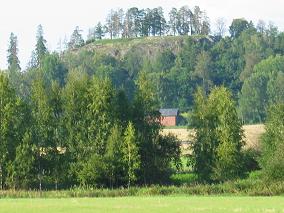
Hakoinen Castle in Janakkala, Finland, was one of the sites subjected to vandalism. Source

If anyone would be interested in becoming an archaeologist, there are a range of different courses available all over the world. Many universities offer archaeology as a degree subject, but you can also find smaller organisations organising courses in archaeology in your local area and probably for a cheaper price.

L

Saturday, 7 June 2014

How do you become an archaeologist?

So I was thinking the other day about the different questions people ask me when I tell them I study Maritime Archaeology. The most common one seems to be; "what made you choose it and how did you get to where you are today?".
I am the happiest standing knee-high in mud! Source 

When I was 13 my teacher asked the class to write down what we want to become when we grow up. She collected all the notes and kept them in a drawer for three years and during the week before we graduated from the school she handed them back out to everyone. To my surprise I found that I had written 'archaeologist'. I had absolutely no memory of this but the thought stuck with me. 

In Sixth Form I decided to take all history classes and other relevant subjects so when the day comes for me to apply for my undergraduate degree in archaeology, I would have the highest chance possible. The day came and I got accepted on to an archaeology programme at the University of Wales, Trinity Saint David, so I packed my bags and moved from Finland to the United Kingdom and I haven't looked back since. 

During my undergraduate degree I became interested in maritime archaeology and decided I should do a masters in that subject. In order to prepare myself for the MA I chose most of the case studies for my assignments from a maritime environment and I also decided to do some work experience at the Mary Rose museum during my second year. This definitely paid off as I got a lot of contacts in the business (which actually in the end got me the job I have today) and it was another good aspect I could put on my masters application.

So I applied and was accepted on to the masters programme in Maritime Archaeology at the University of Southampton. Part of my current research for the program is actually based on ideas I originally thought of when I was 14, but wasn't skilled enough at the time to test them out. So if you happen to come across something interesting then keep it in mind as it may come a day when you actually base you research on it - it is never too early to start!
Just a normal day at the office... Source
Yesterday I finally got a good break as the Royal Naval Museum in Portsmouth hired me! I am very excited as I have finally reached the goal I dreamt about when I first caught an interest in archaeology.

My younger brother once told me that I am the only person he knows who actually follow my dreams and do what I want to do. I realised at that point that far too many people take the easy way out. Where I stand today is the result of 10 years of hard work, during which I have been able to keep my passion and interest for the subject. I now feel I can give others the advice to follow your dreams! It may be hard work and few short cuts, but the feeling you get from achieving you goal is amazing. I still have a long way to go, during which I most likely will have ups and downs, but even if it means I have to work with something else in order to work up my experience in archaeology then that is what I am prepared to do. Don't take the easy way ladies and gents! The hard work was so worth it!

L

Thursday, 27 June 2013

100-Year Old Miniature Watch Found In A Tomb Over 400 Years Old


This is a bit of an old story, but an interesting one nevertheless. In 2009, a miniature ring in the shape of a Swiss watch was found in a tomb Shangsi, Southern China - sealed over 400 years ago in the Ming Dynasty.

During this Dynasty, 'flashy items' were banned, so being buried with a ring/watch like this makes sense as it is a practical item. The fact that it's very small also makes sense; there are many examples in Egyptian tombs where people are buried with items that are very small etc. - it is idea that they 'come alive' and become their real size in the afterlife. The fact that they are made very small was probably to make enough room in the tomb for many other items.

So being buried with a watch makes sense. But being buried with a miniature watch with the letters "Swiss" written on in English on the back of it during this period is a bit strange.
(c) Lunatic Outpost


So what do you think? The Doctor? A practical joke by previous visitors? Or some horrendous advertising scheme?

You can read more about it here.

M

Monday, 24 June 2013

A Missing Link?

Earlier this month, National Geographic published a very interesting article on evidence of a possible new human ancestor. The evidence in form of a bone was found in the Denisova Cave, southern Siberia, by the Russian archaeologist, Alexander Tsybankov, in 2008. However, it wasn't until a few years later when it was discovered how significant the bone fragment actually was. The article is well written and I doubt I will be able to do it better myself, so please have a read through! This story really reminded me that it is because of moments like these I chose to do archaeology as a profession.

L
Picture of Russian cave Denisovan excavation
By: Robert Clark
Source: http://ngm.nationalgeographic.com/2013/07/125-missing-human-ancestor/shreeve-text

Saturday, 22 June 2013

Ancient Beer...UPDATE

As announced in the news this week, the Great Lakes Brewing Company (based in Ohio) are recreating a beer based on the Hymn to Ninkasi - a song written by Sumerians c.1,800BC dedicated to the goddess of beer, Ninkasi - using the authentic techniques they would have used thousands of years ago. They have said that they do not plan to sell the beer, but it is possible they'll set up educational events where people will have a chance to sample the beer and learn how it was made.
(c) Great Lakes Brewing Company.


Cardamom and coriander were first used in the beer, but it was found to be too sour, and so next time round it will be sweetened with honey and/or dates. The brewery have been working for over a year with the Oriental Institute at the University of Chicago, but for the past few months they have been experimenting with brewing the beer for the last few months. Keep an eye out on this blog for updates on how they get on!

---
I have also just discovered that Anchor Brewing (based in San Francisco) also created a beer based on the Hymn to Ninkasi in the 1989 - they called it...Ninkasi! The hymn, translated in 1964 by Professor Miguel Civil, talks about using "beerbread", "earth-covered malt" and "honey and wine".

(c) Twitgoo.
The beer was 3.5% vol., was very dry and bitter; the taste was apparently very similar to hard apple cider. It did not keep very well, and I believe it was only a limited edition beer.

Saturday, 15 June 2013

Ancient Diseases and Their Evidence in the Skeleton


After the recent discovery of the oldest tumour ever found in the rib of a Neanderthal, I have been inspired by it to do a blog post about diseases in archaeology that can be found in the bones that remain. This is what I'm hoping to write my Masters dissertation on, so here is a quick run-through of diseases that have been found in the archaeological record:


---

-Tuberculosis (TB): this is a fairly common, infectious disease, that is usually caused by breathing in a strain of bacteria called mycobacteria; which can also cause leprosy. The disease affects the lungs, and therefore symptoms include coughing, fever, weight loss and coughing up blood. Today, TB can be diagnosed by x-rays, and although antibiotics can be used to treat the disease, tuberculosis can cause death.

The disease has been noted to be one of the oldest diseases, as it has been found in skeletons from Neolithic Mediterranean and Ancient Egypt...many times. It was even thought that Nefertiti and her husband Akhenaten died of TB. Evidence of TB has also been noted in various ancient writings; Hippocrates wrote about phthisis during the 4th century BC, describing tuberculosis-type symptoms; the Sushruta Samhita (a Sanskript medical text written in India c. 400-200BC) notes a treatment for tuberculosis; and the Ebers Papyrus (an Egyptian medical text written c.1550BC) mentions tuberculosis and its treatments.

In the flesh, the symptoms of TB are not that easy to spot: the sufferer may be sweaty, they will look thinner due to the weight loss and loss of appetite, they will look exhausted, but also they might have a swollen neck of sorts (due to possible enlarged lymph nodes). 

TB usually mainly affects the lungs, but if it spreads to the bones, it can affect the spine, ribs and/or long bones...


Tuberculosis of the spine causing the collapse and fusion of several thoracic vertebrae
Tuberculosis of the spine causing the collapse and fusion of several thoracic vertebrae.
(c) Mutter Museum
Fig. 1.
Rib of an adolescant female from St George's Crypt, Leeds; the signs of TB are shown in the boxes.
(c) Proceedings of the National Academy of Sciences of the USA

Last year, Professor Terry Brown and Professor Charlotte Roberts conducted a study together that aimed to identify tuberculosis in skeletons easier; focusing on a 19th century skeletons, but using it as part of a wider study for TB skeletons from 100AD-the late 19th century. Using the bones, they looked at the DNA sequence of bones and found that there were specific gene sequences in TB skeletons; this technique might possibly be used in future tuberculosis studies, and it makes identifying the disease a lot quicker. 


---

-Osteoarthritis: this is an extremely common, degenerative joint disease that degrades the bones and consequently can cause joint pain, stiffness of the joints, joint locking and possible effusion (extra fluids around the joint). It is generally prevalent in older people, but can occur in anyone, depending on the quality of the bone and any injuries that might have been suffered. As it is a degenerative disease, there is nothing that can be done to get rid of it. However, there are treatments that may help: a change in lifestyle, painkillers or even a complete joint replacement. 

Arthritis in general is technically older than tuberculosis - but not in humans - there has been evidence of secondary arthritis in dinosaurs! However, the earliest evidence of arthritis in humans is from a 60,000 year old man from France, named The Old Man of La Chapelle. Later examples include 4,500BC North America and Otzi the Iceman from c.3,255BC Austria/Italy. 

It is prevalent in the archaeology, and therefore is fairly easy to identify in the bones; as a bone-based disease, most if not all, of the consequences of arthritis can be identified on skeletons. The following pictures show that arthritis can completely destroy cartilage (1), can cause extra growth of bone over the joint (osteophyte growth) and eburnation (where the bone changes so it looks 'shiny') (2).


osteoarthritis of the knee
1. Osteoarthritis of the knee from a Middle Saxon cemetary in Norfolk.
(c) Spoilheap Archaeology
http://huberb.people.cofc.edu/www/Classroom%20Visuals/340%20Visuals/Osteoarthritis%20left%20and%20right%20femoral%20heads.jpg
2. Hip joints of a 45-year old male, showing osteophyte growths and eburnation.
(c) College of Charleston
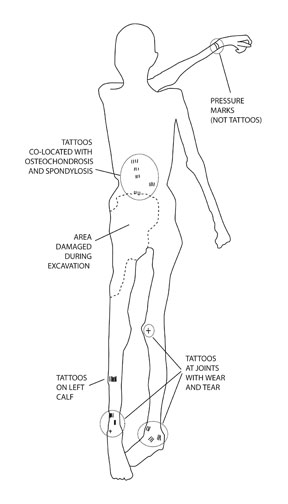
There is also evidence in the archaeology of treating arthritis; most famously, the tattoos Otzi had over his various joints that were thought to be a form of acupuncture to treat arthritis.

http://rosecityacupuncture.com/blog/wp-content/uploads/2012/09/03-otzi.jpg 
Some of 50+ tattoos found on Otzi.
(c) Rose City Acupuncture.

 ---
-Leprosy: this is a chronic, infectious disease that is caused by the bacteria, mycobaterium leprae. It affects part of the nervous system, as well as the muscuous membrane, which leads to the various painful lumps and lesions on the face. It can also cause severe infections or numbness in body parts, which as a result sometimes have to be amputated or taken off.
Today, there are treatments available to get rid of leprosy - various "leprosatic agents" are available to be taken daily until the leprosy has disappeared. 

Leprosy is also an ancient disease; the first evidence of it in a skeleton is from c.2000BC in India, and the first evidence in text is around c.1500BC in the Ebers Papyrus from Egypt. Previous to finding the skeleton from India, it was thought that a man from the Tomb of the Shroud in Jersualem (1-50BCE) was the earliest case of leprosy.
1. Top: a normal person's foot; bottom: a leper's foot.
(c) The Naked Scientists


As mentioned, leprosy mainly causes skin lesions and affects the nervous system; however, surprisingly there is not a lot of evidence in the skeleton that shows the person had leprosy. If someone has had leprosy for a very long period of time - say 20 years or so - then there may be evidence of the shortening of digits on the hands or feet (1); destruction of areas of the face such as the nose (2 & 3); loss of teeth (3) or loss or erosion of any body part (4).

2. The skull of a leper from 4,000 years ago, India.
(c) Live Science
It should be noted though that these symptoms can also show tuberculosis - however the more of the above symptoms are found in the skeleton, the more likely it is that it is leprosy instead of tuberculosis.

A recent study has found that by studying the lepers from the Medieval period, the reason leprosy isn't so common in the world anymore (in Medieval Europe, 1 in 30 people had leprosy) is because we as humans have changed, not the disease. It has been noted that this study could be useful in solving clues about TB, syphilis and the bubonic plague.


Leprosy evidenced from destruction of facial bones, Roffey and Tucker 2013
3. Destruction of the top row of teeth and part of
nose due to leprosy.
(c) Bones Don't Lie.


Skeleton showing the effects of leprosy, Netherlands, 1250-1500
4. Feet from a leper c.1250-1500, Netherlands.
(c) sciencemuseum.org


---

That's all for now, there are many more diseases that have ancient origins, and can be evident in the skeleton - cholera, typhoid, smallpox, rabies, malaria etc. - however I fear if I write about any more diseases, I may never stop.
Please see below for some further reading; The Archaeology of Disease is a must if you wish to know more about disease in the archaeological record, it's a fantastic book.


Further Reading:
- The Archaeology of Disease - Charlotte A. Roberts & Keith Manchester - 2010
- The Bioarchaeology of Metabolic Bone Disease - Megan Brickley & Rachel Ives - 2008
- Disease in London, 1st-19th Centuries: An Illustrated Guide to Diagnosis - Don Walker - 2012
- Mummies, Disease and Ancient Diseases - Thomas A. Cockburn et al - 1998
- Bones Don't Lie blog post on tuberculosis


M